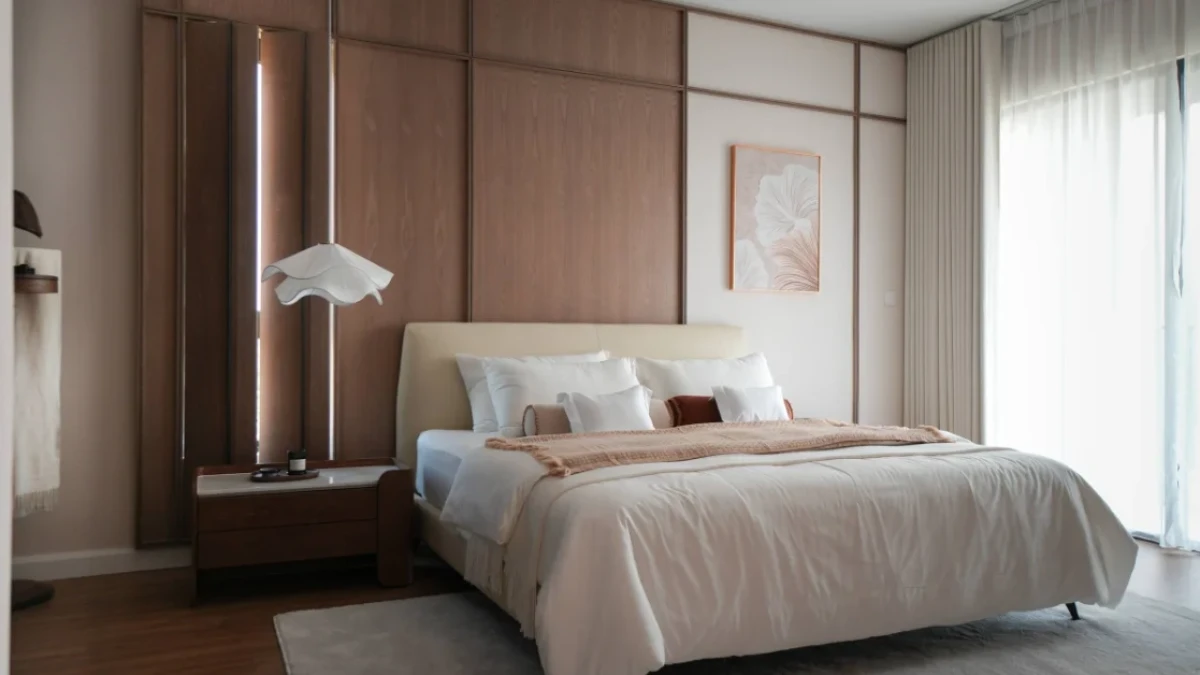
A well-furnished bedroom in a modern Malaysian home comes down to four pieces that earn their place: a bed frame, one solid storage unit, a bedside table and a good light source. Everything else is optional and depends on how much floor space you actually have. In the Klang Valley, that space is often tight, which is exactly why smart bedroom furniture choices matter more here than almost anywhere else.
This guide walks through the pieces worth prioritising, how to choose storage for compact rooms, and how to pull it all together with a calm colour scheme and a sensible layout.
What Bedroom Furniture Do You Actually Need?
Kuala Lumpur homes average around 827 sq ft (EdgeProp, citing MKH Bhd research, 2019), and much of that is given over to living and kitchen areas. A typical condo bedroom lands somewhere between 100 and 144 sq ft, so the honest starting point is restraint. Buy the pieces you use daily before the pieces that only look good in a showroom.
Four items do the heavy lifting:
A bed frame should fit your room comfortably, not just look good in a catalogue. A queen-size bed works well in most master bedrooms, while a single or super single is ideal for children's rooms or guest rooms.
Before purchasing, make sure your mattress follows Malaysian standard mattress dimensions, as sizes can vary between countries. A king-size mattress from another country may not fit a Malaysian king-size bed frame.
- One primary storage unit, usually a wardrobe or a chest of drawers.
- A bedside table for a lamp, phone and a glass of water.
- A light source beyond the ceiling fixture, such as a bedside lamp or wall light.
From there, extras like a bench, a reading chair or a dressing table are nice when the floor plan allows. In a 10 by 10 room, they rarely do. A clear floor reads as calm, and clutter is the fastest way to make a small bedroom feel smaller.
How Do You Choose Wardrobes and Storage for Compact Rooms?
In a small bedroom, storage should go up, not out. A floor-to-ceiling wardrobe uses the full height of the wall while keeping its footprint small, which is the single most effective move in a room where every square foot counts. The goal is to store more without eating into the walking space.
A few principles keep storage efficient:
- Go vertical. Tall wardrobes give you the same hanging and shelf capacity as wide ones on a fraction of the floor.
- Prefer sliding doors. Hinged doors need up to half a metre of swing clearance in front of them. Sliding doors remove that waste entirely.
- Use the bed. A frame with built-in drawers or a lift-up base turns dead space under the mattress into storage for linen and off-season clothing.
- Pick finishes that hide fingerprints. Matte and wood-grain surfaces stay looking clean longer than high-gloss in a humid, often-handled bedroom.
Humidity is a genuine factor here. Malaysian air keeps wardrobes and drawers working hard, so solid, well-finished timber or properly sealed board holds up better than cheap veneer that lifts at the edges. Our notes on how to care for wood furniture in Malaysia's climate explain how to keep storage pieces sound for the long run, which matters given that 78.0% of Malaysian households owned their homes in 2024 (Department of Statistics Malaysia, Basic Amenities Survey Report 2024) and tend to furnish for the long term rather than the short lease.
Bedside Tables and Dressers That Balance Form and Function
A bedside table should hold what you reach for at night and nothing more: a lamp, a book, a phone and a glass of water. Oversized nightstands crowd a narrow walkway between the bed and the wall, so match the table height roughly to the top of your mattress and keep the width proportional to the bed.
For dressers, the question is whether you need a dedicated one at all. In a compact room, a chest of drawers often does double duty: clothing storage below, a surface for a mirror and daily items on top. That removes a whole piece of furniture from a tight floor plan while keeping the function.
When you do have room for a proper dressing area in a master bedroom, separating the dresser from the chest keeps each surface purposeful. A low, wide dresser with a mirror creates a grooming station; the chest handles bulk storage. Nicchris designs its case pieces so a bedside table, chest and dresser can share the same timber tone and handle style, which keeps a mixed set looking deliberate rather than pieced together over time.
Calm or Colourful? How to Choose the Right Colours for Your Bedroom
The colours you choose can change how your bedroom looks and feels. While some people prefer a calm, neutral space, others enjoy a bedroom with more colour and personality. Both can create a comfortable and relaxing environment when the colours work well together.
For a Calm and Relaxing Bedroom
Choose soft, muted colours such as warm beige, off-white, sage green, dusty blue or light grey. These shades create a gentle, peaceful atmosphere without making the room feel too busy.
Pair them with natural wood furniture, soft bedding and simple decorations to bring warmth into the space. A light oak or walnut bed frame can complement these colours beautifully.
For a Colourful and Cosy Bedroom
If you prefer something more expressive, consider colours such as terracotta, olive green, mustard yellow, dusty pink or muted burgundy. These shades add character while still keeping the bedroom warm and inviting.
You don't have to paint every wall in a bold colour. Start with neutral walls and introduce colour through your bedding, cushions, curtains or artwork. Darker wood furniture can also create a beautiful contrast against colourful surroundings.
Finding the Right Balance
Whether you prefer neutral or colourful interiors, try to work with two or three main colours and let your furniture complement them. The goal is to create a bedroom that feels comfortable and reflects your personality, rather than following one particular style.
For inspiration, explore our Japandi style guide for Malaysian homes to see how natural wood furniture and soft colours can work together.Layout Tips for Small and Master Bedrooms
Good layout is mostly about circulation. Leave a clear path of at least 60 to 70 cm around the sides of the bed you use, and never block a window or the door's swing with a tall piece. In a small room, that often means the bed goes against the longest wall and storage lines a single adjacent wall, leaving the rest open.
For small bedrooms:
- Push the bed into a corner if only one side needs daily access, freeing the opposite wall for a full wardrobe.
- Keep furniture low where you can. Low profiles make a low-ceiling condo room feel taller.
- Choose one focal piece, usually the bed, and let everything else recede in tone and height.
For master bedrooms, zoning does the work that extra walls cannot. Mark a sleep zone around the bed, a dressing zone with the wardrobe and dresser, and, if there is room, a quiet corner with a chair. Furniture placement and a rug can define each zone without any building work. Air flow matters too: leave a gap around vents and the air-conditioner so the room ventilates properly, which recent building-science research links to better sleep quality.
A tape measure is your best tool before any purchase. Sketch the room to scale, mark the door swing and window, then place furniture on paper first.
Putting Your Bedroom Together
Pick your four essentials, measure the room, and settle on a two or three colour palette before you buy a single piece. That order, function first and decoration second, is what keeps a compact Malaysian bedroom feeling calm instead of crowded. When you are ready to see how pieces feel in person, visit the Nicchris showroom to test proportions and finishes against your own room dimensions before you decide.